
College Park City Directory Holdings
A College Park city directory works best as a bridge between census years. It can place a family at an address in print. But the material is scattered. Suburban volumes, telephone books, library shelves, and archival collections each hold a piece. Start from whatever is already known: a name, a street, or an old community name. Write down the issue date and page before moving to the next source. Remember that a printed listing may name only a subscriber or a business contact. Treat it as a dated lead. Then check it against census, deed, obituary, or probate evidence. Draw conclusions about who lived in the household only after that.
| Collection | Years | Where Held | Access |
|---|---|---|---|
| J. Frank Lewis & Co., Prince George's County Maryland Directory | 1878 | County Historical Society history leads | County-wide context, with locality or address needed to connect a line to College Park |
| Nelson's Washington Suburban Directory | 1918, 1923 | Maryland Historical Trust citations for nearby suburbs | Catalog request needed to confirm College Park pages and shelf location |
| Polk's Washington Suburban directories | 1927-28, 1930-31, 1954-55 | Prince George's County Genealogical Society and Historical Society catalog leads | Ask for the title and year; the 1930-31 catalog lead is F0179.3.A18 |
| Polk's College Park, Hyattsville, Mount Rainier, and Riverdale City Directory | 1963, 1964, 1966, 1968, 1969, 1971 | PGCMLS and local genealogy collection references | College Park-specific run identified; individual call numbers and availability still need confirmation |
| Washington metropolitan and Maryland-suburban telephone directories | 1963-64, 1966-67 | Library of Congress | Free digitized page images and text search |
The runs below are cited holdings, not a claim of annual or complete coverage. No official catalog lists a first or last printed issue that names College Park specifically. So confirm the exact volume before any trip or copy request. A librarian can save hours of guesswork. Verify each entry on your own.
College Park's Suburban Directory Runs
The Polk material changes how a name search should be framed. The 1927-28 and 1930-31 titles cover Washington suburbs in Maryland and Virginia. College Park entries may sit beside those of neighboring places. The 1954-55 volume is a Maryland-Washington, D.C. suburban directory. Later issues from 1963 through 1971 name College Park together with Hyattsville, Mount Rainier, and Riverdale. Search by title, date, and neighboring municipality. Never assume a catalog uses only the current city name.
For a before-1940 address lead, the 1930-31 Polk catalog copy is especially valuable. It bridges the gap before the 1940 census. Treat each line as an index to a place and a date. It is not a full household census. Local publishers issued directories irregularly. A printed address can trail a move by a year or more. Record the issue year, page, spelling, and any street abbreviation. That way the next source can be checked on its own terms.
| 1878 | J. Frank Lewis & Co. publishes a county directory that supplies pre-incorporation context. |
|---|---|
| 1918 and 1923 | Nelson's Washington Suburban Directory is cited for nearby suburban communities. |
| 1927-31 | Polk Washington-suburban issues provide the next documented suburban run. |
| 1954-55 | A Polk Maryland-Washington suburban directory appears in county bibliography and catalog references. |
| 1963-71 | Documented Polk issues name College Park with Hyattsville, Mount Rainier, and Riverdale in selected years. |
Note: When contacting a holding library, give the publication title, place, format, and exact year, because a broad request for a College Park directory may miss a suburban volume.
College Park Directory Research Desk
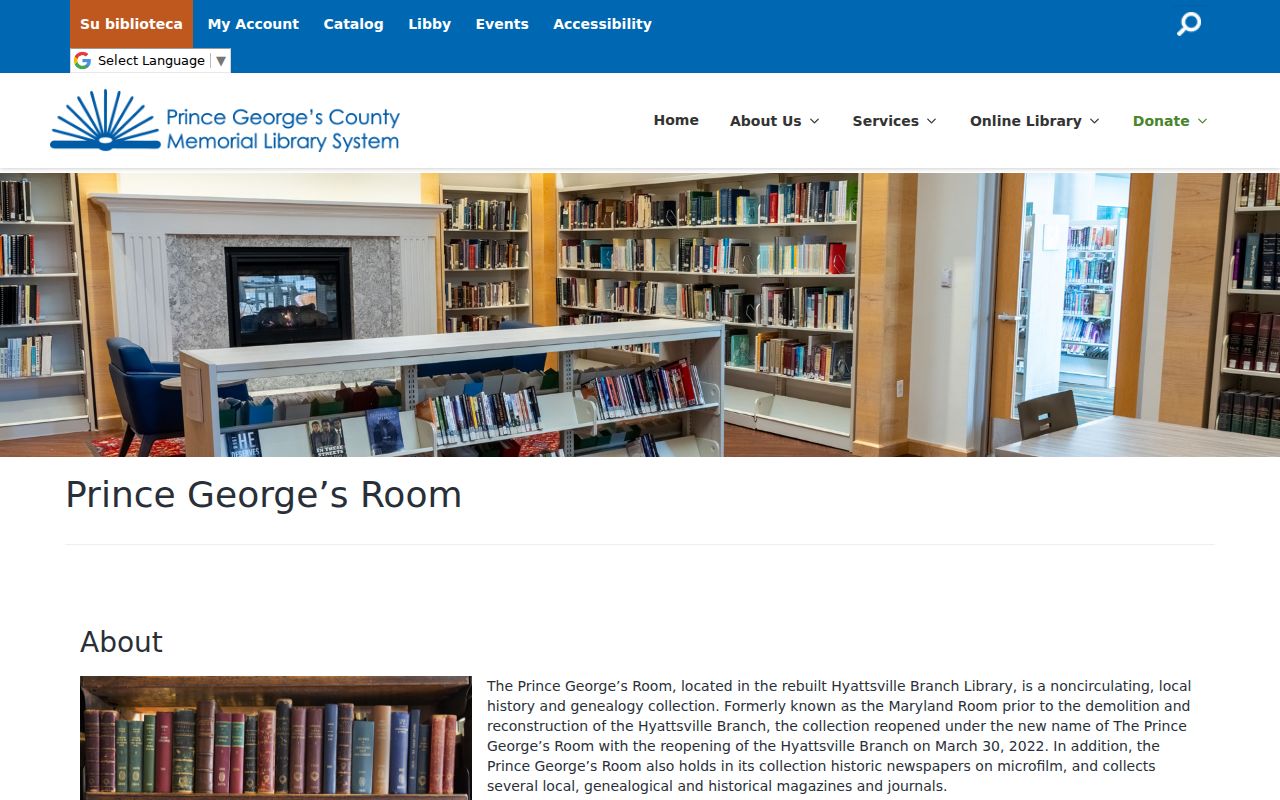
A printed city directory for College Park is not always exposed online. That is where the Prince George's Room earns its keep. The room sits in PGCMLS's Hyattsville Branch. Its noncirculating shelves hold historic newspapers on microfilm plus local and genealogical journals. Readers can use on-site microfilm and microfiche equipment. Digital Maryland adds 169 digitized historic-house and site photographs to the room's holdings. A library desk like this supplies context a printed volume rarely carries alone.
The PGCMLS Discovery Suite pulls together a wider net. Holdings include historical directories, census schedules, genealogy, land and probate sources, church material, newspapers, maps, and private papers. Remote access varies by database, and Ancestry Library Edition works only inside a branch. A College Park address can spill into a neighboring community. The Greenbelt Tugwell Room then offers local files, directories, obituaries, and oral histories. The Sojourner Truth Room gives another route into local African American history. Scanner and copier access is on hand there. The Prince George's Room collection page shows the local-history setting available for College Park historical research.
That is the real value of the desk. A directory entry opens the door, and the surrounding collection carries the inquiry forward.
Read a College Park City Directory Line
A scanned 1966-67 Maryland-suburban telephone directory shows the local format clearly. It is a telephone directory, not a Polk city-directory entry and not a government record. Each line runs surname first. Then come the given name or initials, street number, and abbreviated street name. The line adds a compressed locality such as “ColegPk,” and a telephone number. One entry places a person on Knox Road. Another shows a College Park lodge. Neither one establishes the full household, so treat each as a single dated clue.
| Printed name | Subscriber or organization name, usually surname first, followed by given name or initials. |
|---|---|
| Address line | Street number, abbreviated street name, and a compressed locality. OCR can misread each part. |
| Telephone | A number associated with the printed listing for that particular issue. |
| Issue placement | Issue date, page or image number, and the Library of Congress item identifier. |
| Work or occupation | Not consistently visible in this telephone sample. A Polk volume may print it, but only the issue itself can establish that. |
| Spouse or widow notation | Not consistently visible in this telephone sample. Read the same issue's abbreviation key before interpreting a richer line. |
| Owner or residence mark | No such mark was observed in this telephone sample. Do not infer it from a mailing line or a later record. |
Before interpreting a richer Polk line, copy the front matter, street index, and abbreviation page. Conventions vary by issue. A line may carry a spouse in parentheses, a widow notation, work or business details, an address, and a residence or ownership mark. A key from another year cannot simply be imported.
- Criss-cross directory
- An address or telephone-arranged section that is read from a street or number toward the printed name, rather than from a surname.
- Householder index
- An alphabetical access section for household heads when a particular volume includes one. It is not proof that every person at the address appears.
- Abbreviation key
- The volume's explanation of its short forms and marks. Use the key printed in the same issue as the listing.
College Park Criss-Cross Directory Searches
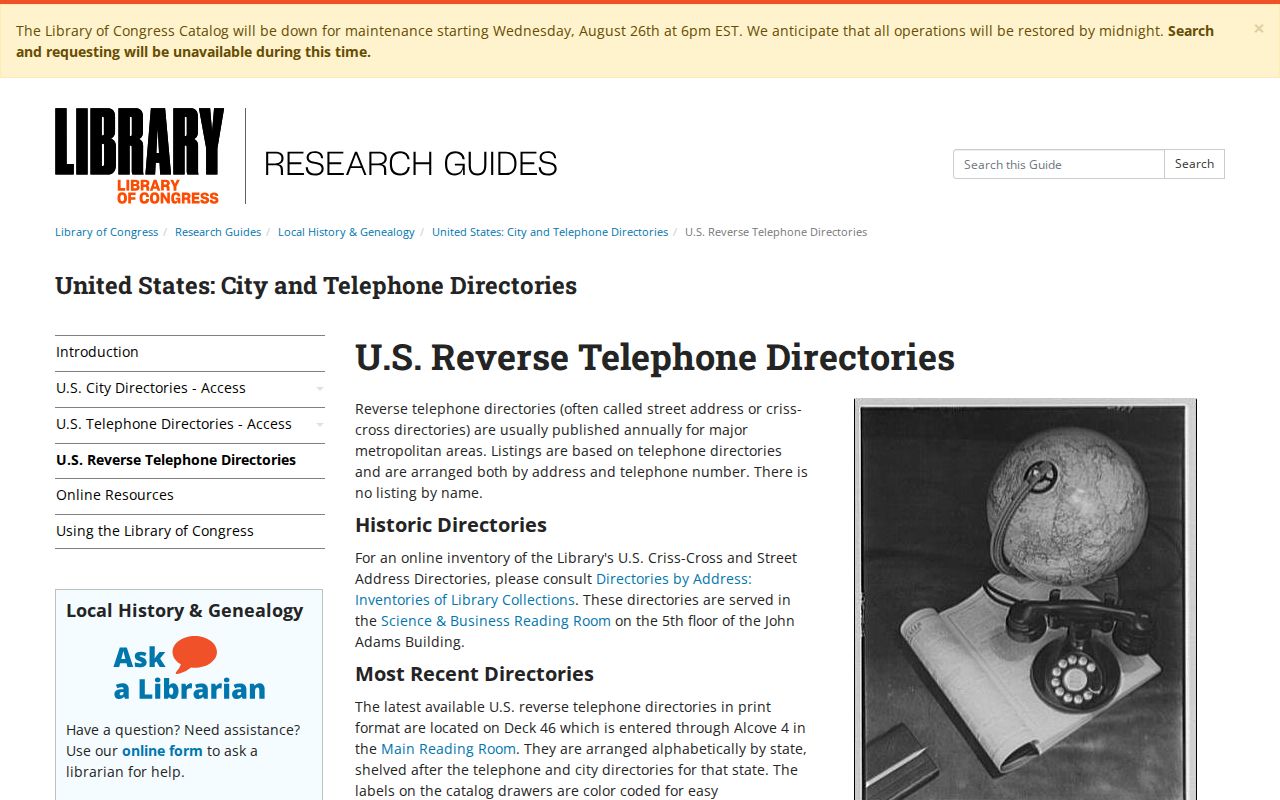
An alphabetical directory starts from a surname. A criss-cross, or reverse, directory starts from an address or telephone number instead. The Library of Congress notes that historic reverse and street-address directories are arranged by address and telephone. They are not arranged by name. That order matters when an old deed, letter, or census page gives you a street. You may have no reliable spelling of the household.
The Library of Congress reverse-directory guide asks that a request identify the type wanted. That may be street address, criss-cross, telephone, or city business. It should also include the state, place, and specific years. Recent print holdings generally sit in the reading room. The historic inventory is a separate request. Treat this as an access path only. It is not proof that a requested College Park issue survives. The reverse-directory guide illustrates the address-first format. That format is used when a College Park search starts with a street.
Know which index you hold before you dig. A name index will not answer an address question, and mixing the two wastes an afternoon with a College Park street directory.
Note: Record the street spelling and house number exactly as printed first, then try variants only after that original form is safely noted.
College Park Directory Names Before Incorporation
Old College Park records do not always say College Park. The area grew from Branchville, Berwyn, Lakeland, Old Town, and other development-era communities. Branchville had a post office by 1867. Berwyn took shape from 1891, and the town itself incorporated in 1945. A pre-incorporation directory, cemetery file, or church record may therefore sit under a community name. It may not use the modern municipal label at all. County directory volumes follow the same pattern.
Search strategy matters here. Pair the exact address with its historic locality. Then retry the surname without punctuation or with a street-name variant. The 1966-67 scan shows a documented abbreviation, ColegPk. Optical character recognition also distorts street names and house numbers in older scans. Lakeland research may need oral histories or church sources instead of a directory alone. Remember that a postal name and a community name are two different search terms.
Trace a College Park Directory Household
Treat each College Park city directory issue as one dated observation. Family history gets stronger that way. Start from a known street or surname. Preserve the printed line exactly, and compare the nearest census image. Federal schedules through 1950 are open under the 72-year rule. The 1950 Census is free to use. A telephone listing names a subscriber. A census shows who lived in the household, so the two records answer different questions.
- Find the earliest available issue for the address or surname and record the spelling, street abbreviation, phone number, and issue page.
- Read all same-surname lines in the alphabetical section. Note a spouse, widow notation, or other detail only when it appears in that issue.
- Use the address or criss-cross section when it exists, then compare the closest census year with the local name and enumeration-district context in mind.
- Search the next issue forward and backward. An absent year may be a publication or holding gap, rather than a move.
- Test a disappearance with a deed, probate, death index, obituary, or later transfer record.
The County Historical Society's DeMarr Library widens the trail considerably. Its shelves hold obituary files, historic maps, church and tombstone material, and local newspapers. Plats, property files, and architectural surveys round out the collection. For probate, Maryland researchers can draw on Prince George's County material in FamilySearch collections. Image access there can depend on an account or an affiliate center. These sources confirm a relationship or an event after a directory lead appears. They should not be asked to turn one printed line into final proof.
Note: A missing name can mean a move, a death, an unlisted telephone, a publisher's choice, or a lost volume. Compare dated records before concluding anything.
College Park Directory Gaps
Some gaps belong on the map of any College Park city directory search. No official catalog page identifies the first or last printed issue naming College Park specifically. PGCMLS does not expose direct call numbers, shelf positions, or availability for each 1963 through 1971 Polk issue. The Maryland State Archives directory page lists a 1962 Polk Laurel item. That listing establishes nothing about College Park holdings.
The city sources include no separate city-wide resident register either. The City Clerk keeps municipal records. The office also accepts Maryland Public Information Act requests for existing material. The city is not required to create a directory on request. Ask for a defined document type, date range, and location when a city-created record is what you need. For directory gaps, start with the library, the Historical Society, or the Library of Congress. Try the archives too before concluding an online residents directory search failed.
College Park Records After the 1912 Fire
A 1912 fire at the University of Maryland destroyed many campus documents. That fire was not a Prince George's County courthouse fire. County deeds survive it, and so do most local directories. It does explain one gap. Campus-adjacent personal history may need rebuilding from later sources. Those sources include student publications, oral histories, maps, and University Archives material. The loss makes a small directory citation more useful when paired with another dated source.
The Prince George's County Historical Society offers a second route through its DeMarr Library. Maps, newspapers, property files, photographs, and community histories all sit there. Volunteer hours vary by notice, so confirm them before you travel. The Society's holdings can link an old directory address to another record. That record may be a plat, obituary file, or historic-property entry. No single searchable index covers every family, and the collection does not claim one.
The Historical Society access page points to county history and library resources. These sit alongside College Park historical volumes.
Companion collections like these let you test a directory lead against local evidence created for some other purpose entirely.